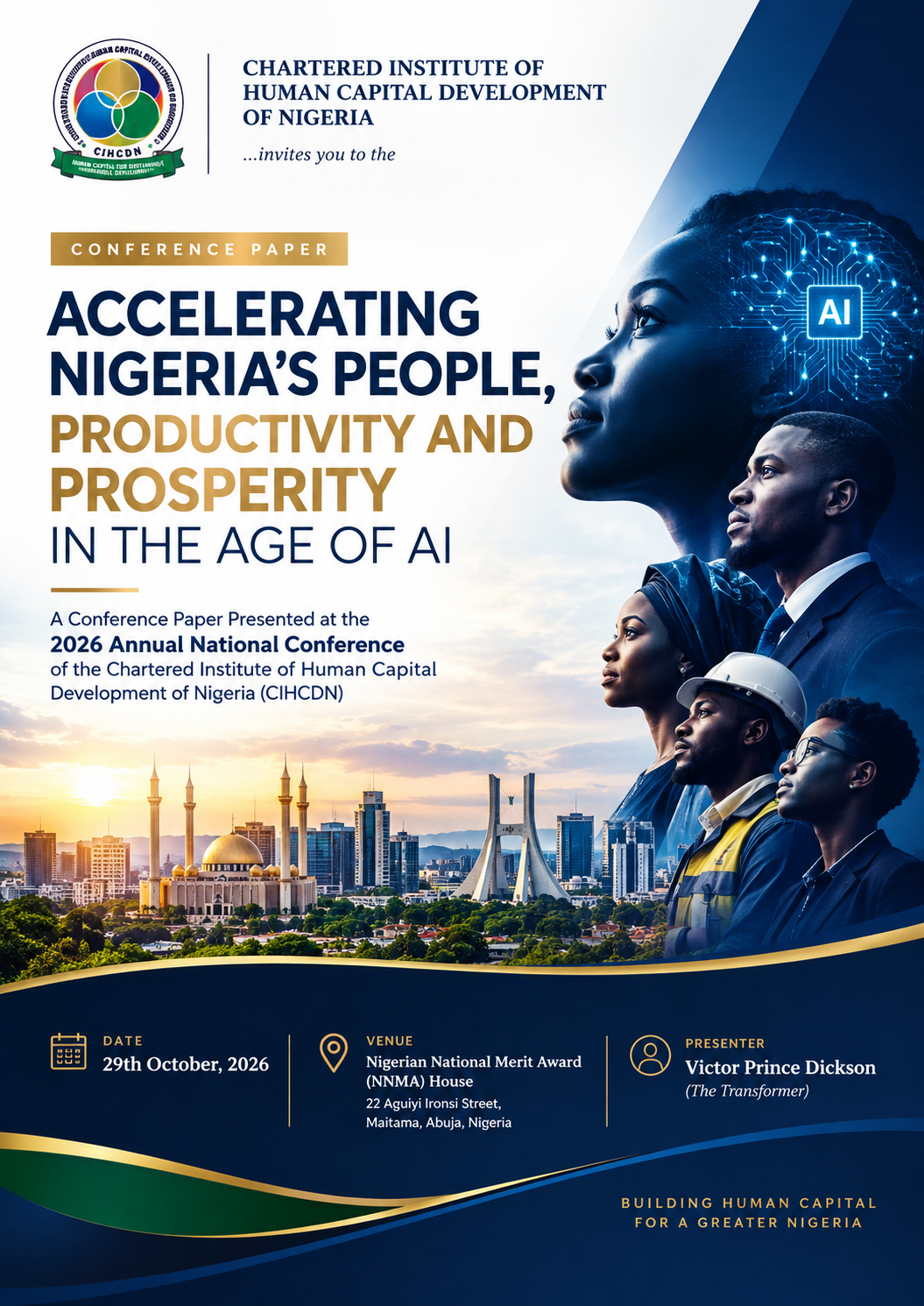
ACCELERATING NIGERIA'S HUMAN CAPITAL IN THE AGE OF AI
A thought-provoking conference paper by Victor Prince Dickson (The Transformer)
The future of Nigeria will not be determined by artificial intelligence alone. It will be determined by the quality, capability, adaptability, and productive capacity of the people who must harness it.
Yet, as the world accelerates into the age of AI, an important question confronts Nigeria:
Are we developing our people at the same pace as technology transforms the world?
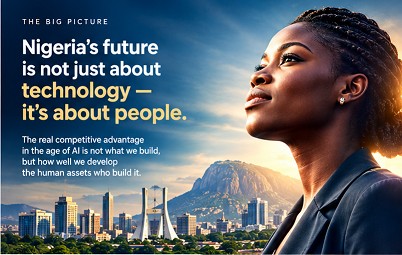
This paper challenges conventional thinking about human capital development and presents a compelling argument: Nigeria's prosperity depends not simply on having more educated people, more trained workers or more technology, but on deliberately building human assets capable of creating value in the face of problems, challenges and opportunities.
A DIFFERENT WAY TO THINK ABOUT HUMAN CAPITAL
In this paper, Victor Prince Dickson takes the conversation beyond the familiar language of human capital development and examines the fundamental processes, environments and human capabilities that determine whether an individual becomes a productive asset to society.
At the centre of the discussion is an original conceptual framework:
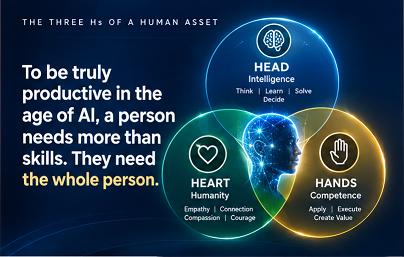
THE THREE Hs OF HUMAN CAPITAL
- HEAD – Intelligence: The capacity to think, learn, understand, process information and exercise judgement.
- HEART – Humanity: The capacity for empathy, relationships, emotional intelligence, connection, courage and compassion.
- HANDS – Competence: The capacity to translate knowledge and intentions into practical skills, execution and measurable results.
The argument is simple: a truly developed human asset must possess all three.
WHAT WILL YOU DISCOVER IN THIS PAPER?
The discussion here is not a generic one on AI, digital transformation, or workforce development. It examines the human foundations of national productivity through five important perspectives.
1. Rethinking the Meaning of Human Capital: Why should we move from merely developing human resources to deliberately building human assets? What does it actually take to produce people who can create value?
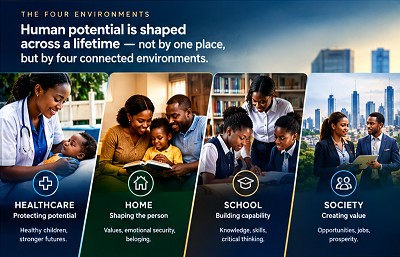
Focusing On The Four Environments of Human Asset Formation
An examination of four critical environments that shape human development:
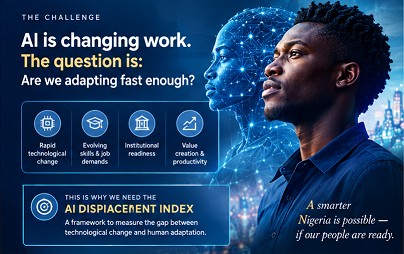
3. The AI Displacement Challenge
Introducing the proposed AI Displacement Index (AIDI) as a framework for examining the relationship between the speed of technological disruption and the speed of human adaptation.
Are people adapting as quickly as AI is evolving? What happens when technological advancement outpaces human readiness?
4. The Neuroscience of Human Development
Why productivity cannot be understood without examining the human brain, behaviour, emotional experiences, psychological burdens and the influence of trauma on performance and growth.
5. The Nigerian Emotional Map
Exploring how Nigeria's historical and collective emotional experiences may have shaped the Nigerian psyche, behavioural patterns and national productivity, and why human capital development must take these realities seriously.
WHO SHOULD READ THIS PAPER?
This paper is particularly relevant to:
- Government officials and public policymakers.
- CEOs, business leaders and corporate executives.
- Human Resource and Human Capital Development professionals.
- Educators, school administrators and learning institutions.
- Psychologists, behavioural scientists and development practitioners.
- Researchers, consultants and management professionals.
- Technology leaders and AI transformation advocates.
- Anyone interested in Nigeria's economic future and national development.
WHY THIS PAPER MATTERS NOW
Nigeria cannot afford to approach the age of artificial intelligence as a technology conversation alone.
We must also ask whether our homes are ready, whether our schools are ready, whether our healthcare systems are ready, whether our institutions are ready and, most importantly, whether our people are ready.
Technology may accelerate production, automate processes and redefine industries. But the quality of human intelligence, humanity and competence will remain central to how societies convert technological possibilities into sustainable prosperity.
The real national question is no longer simply how much technology we can acquire. It is how much human capability we can build to create value with it.
DOWNLOAD YOUR COPY NOW!!
If you are interested in the future of human capital, the Nigerian workforce, AI, productivity, behavioural intelligence and national development, this is a paper worth reading, reflecting upon and sharing.
Read the argument. Examine the frameworks. Challenge the assumptions. Join the conversation about the future of Nigeria's people.